
Missing teeth create severe aesthetic and functional problems. A missing tooth can alter the entire mouth structure, leading to shifting teeth, gum problems, and poor chewing function. At Dental Health Group, we offer dental implants to help patients replace missing teeth in Colmar, PA. Dental implants are designed to look, feel, and function like your own, whether you’re missing one, several, or all your natural teeth. Dr. Joel Chanen, Dr. Robin Chanen, and Dr. Lisa Stahlecker have completed the Synergy Implant Training Program to master implant treatment planning and placement.
What Can Dental Implants Do For My Smile?
Dental implants are designed to provide a foundation for replacement teeth that look, feel, and function like natural teeth. People with missing teeth can smile confidently, knowing their teeth look natural and their facial contours are preserved. Dental implants can also help maintain facial structure. They prevent the bone deterioration that happens when you lose teeth.
Dental implants provide a wide range of tooth replacement solutions, including:
- Single tooth replacement
- Anterior replacement
- Posterior replacement
- Full upper replacement
Our dentists will take X-rays to examine your teeth, gums, and jaw to determine which replacement is right for you. You may also need a dental bridge or denture if you need a tooth extraction or grafting before treatment.
Types of Dental Implants
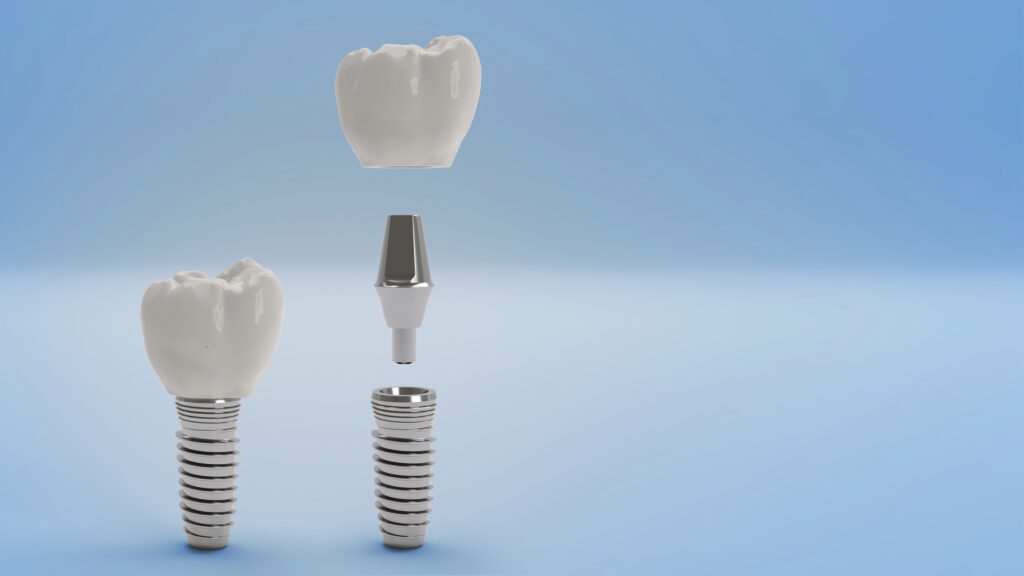
A root implant is the most popular and most effective because it mirrors the size and shape of a patient’s natural tooth. This implant is often as strong as the original tooth. The implant or artificial root is placed into the jawbone under local anesthesia and then heals to integrate with the bone.
Once the jawbone is attached to the implant, the patient returns to the dental office, where the implant is fitted with the new tooth. This process generally takes anywhere from three to eight months.
Plate-form implants are ideal when the jawbone is not wide enough to support an implant properly. The plate-form implant is a flat, long implant set directly on the jawbone and under the gums. Bone and tissue will eventually grow around this implant and make it more secure. This type of implant is also called an endosteal implant.
We recommend a subperiosteal implant when the jawbone has receded to the point where it can no longer support an implant. Subperiosteal implants are dental implants made out of a metal framework. This metal frame is attached under your gum tissue but above your jawbone. Protruding from the metal frame of the subperiosteal implant are small metal posts.
Dental Implant Treatment in Colmar, PA
Before dental implant treatment, our dentists will thoroughly examine your gums and jaw bone. We take dental X-rays to find tooth gaps and determine if you require bone grafting treatment. Our office may recommend bone grafting for patients who don’t have sufficient bone tissue to support their dental implants.
At Dental Health Group, one of our oral surgeons will begin treatment by placing the implant posts. Our oral surgeon will place the implants in the jaw bone, where the implant posts heal over 3 to 6 months.
This healing period is called osseointegration. Our implant surgeon will also place healing caps to cover the implant posts. Then, in our office, we take dental impressions to create custom dental crowns, bridges, or dentures. Once the dental implants are fully healed, we place the restorations and make adjustments for your comfort.
Dental Implant FAQs
We answer some of our patients’ most common questions about tooth implant procedures in Colmar and Lansdale, PA.
What are the advantages of dental implants over other options?
Tooth implants are more durable and long-lasting than bridges or dentures. They prevent bone loss by stimulating the jawbone, preserve facial structure, and don’t rely on neighboring teeth for support. Implants also look, feel, and function like real teeth, providing better comfort and stability.
Can you get dental implants with severe bone loss?
Yes, but severe bone loss may require a bone graft or sinus lift to rebuild the jawbone before implant placement. These procedures create a stable foundation for the implant. We will assess your bone density through imaging to determine if grafting is necessary.
Can I get a dental implant years after losing a tooth?
Yes, you can get an implant years after tooth loss, though you likely have bone loss and may need grafting. We’ll evaluate your jaw bone and determine if you need a sinus lift or bone graft. Then we can proceed with implant treatment.
Can you get a tooth implant while pregnant?
No, we don’t recommend implant surgery during pregnancy. Dentists often delay non-urgent procedures until after childbirth to avoid stress and potential complications. If you need urgent treatment, our dentist will discuss safer alternatives or temporary options.
Do you have to go without teeth before getting implants?
No, you don’t have to go without teeth while you wait for implants. Temporary restorations, such as flippers or partial dentures, can fill the gap during the healing process. These options maintain your mouth’s function and appearance until we place the permanent implant.
How many teeth can I replace with tooth implants?
Tooth implants can replace a single tooth or replace an entire arch of missing teeth. For multiple missing teeth, implants can support bridges and full-arch restorations. Treatments like All-on-4 use four to six implants to anchor a complete set of replacement teeth. The approach depends on your specific needs and bone structure.
Restore Your Smile With Implant Treatment Today
Do you need to restore your missing teeth? Are you looking for a way to permanently renew your smile? Call Dental Health Group for dental implant treatment in Colmar, PA, today at (215) 774-6702.
You can also request a dental appointment with us online. We’re proud to serve patients from Lansdale, Montgomeryville, Harleysville, and Hatfield.